
Switching Between Screens and Losing Track of a Gaming Session
Introduction
A gaming session rarely ends with a clear decision. More often, attention drifts: a player checks a message, opens a stream or glances at a feed, then returns to the game unsure of what they were doing. The screen changes, but the session continues.
That gap matters. Games ask players to track short-term goals, monitor changing conditions and respond at the right moment. Switching away breaks that chain. Returning to the game means first working out what has changed before making the next move.
The result may be a missed cue, a poorly timed move or simply the sense that the session has gone on longer than intended. Over time, though, frequent screen switching can affect both performance and enjoyment.
Analysis of the player
Players lose the thread in different ways. Someone playing a story-driven game may find that its emotional pace has faded. In a competitive match, a player might lose track of an objective, an opponent’s position or the events that led to the current situation.
Either way, the player has to rebuild context: recall the immediate goal, work out what has changed and decide whether the original plan still makes sense. That takes effort, even after a brief interruption.
Some players find it easier to pick up where they left off, and some games make that easier, too. A turn-based game often preserves a clear state. In a fast-paced, real-time game, events keep unfolding, so the returning player must catch up on what happened while their attention was elsewhere.
Deliberate breaks are different from reflexive checking. Pausing between rounds sets a clear boundary. Reaching for another screen whenever the game slows down turns every lull into a potential interruption.
Key factors
Timing matters. A break between matches offers a natural moment to look elsewhere. Switching screens during a tense sequence disrupts the game’s rhythm. The same interruption can be harmless at one point and costly at another.
Information density plays a role, too. Some games require players to follow several things at once; others leave more room to think. The more information a game presents, the harder it can be to return with a clear picture of the situation.
The type of second screen shapes the distraction. A brief message may be easy to process, while a stream or social feed offers a steady flow of images, reactions and prompts. A quick check can turn into following a separate story.
Memory and mental load matter as well. Players keep track of goals, resources, plans and recent events, often without consciously noting them. Switching screens pushes some of that information out of focus, while the game continues without waiting.
Finally, time awareness can suffer. Games divide time into rounds, missions or checkpoints, while other screens often offer an endless stream of content. Moving between the two can make it harder to tell how long a session has lasted or whether it still has a clear purpose.
Match scenario
Imagine a player waiting through a lull in a competitive match. They check a notification, read a reply and return just as the game enters a decisive phase. The interruption seems minor, but they have missed the shift from waiting to acting.
Back in the game, they may respond to what they see without understanding how the situation developed. Their move might seem reasonable, yet still be wrong because they missed who acted first, which resource was spent or where a teammate moved.
One mistake may not decide the match, but its effects can build. A rushed response creates another problem and demands more attention, just as the player is trying to catch up. The game becomes harder to read when a clear understanding matters most.
Now imagine the player waits until the round ends to check the notification. The break still interrupts the session, but it comes at a natural boundary. When the player returns, they can review the next objective and start with a clearer picture of the game.
This does not mean every interruption ruins a game or that players should treat gaming as uninterrupted work. The difference is whether the game can absorb the interruption or whether the player returns already behind.
Conclusion
Losing track of a gaming session is rarely a single lapse in concentration. Attention shifts, the game moves on, and the player returns with only a partial sense of what has changed. The cost shows up in decisions and in how present the player feels.
Screen switching is most disruptive when it is frequent, unplanned and poorly timed. Players can reduce its impact by using natural pauses, setting a clear goal for the session and noticing when a quick check turns into a second activity. The aim is not to avoid other screens altogether, but to recognise that each switch means leaving one context and rebuilding it later.
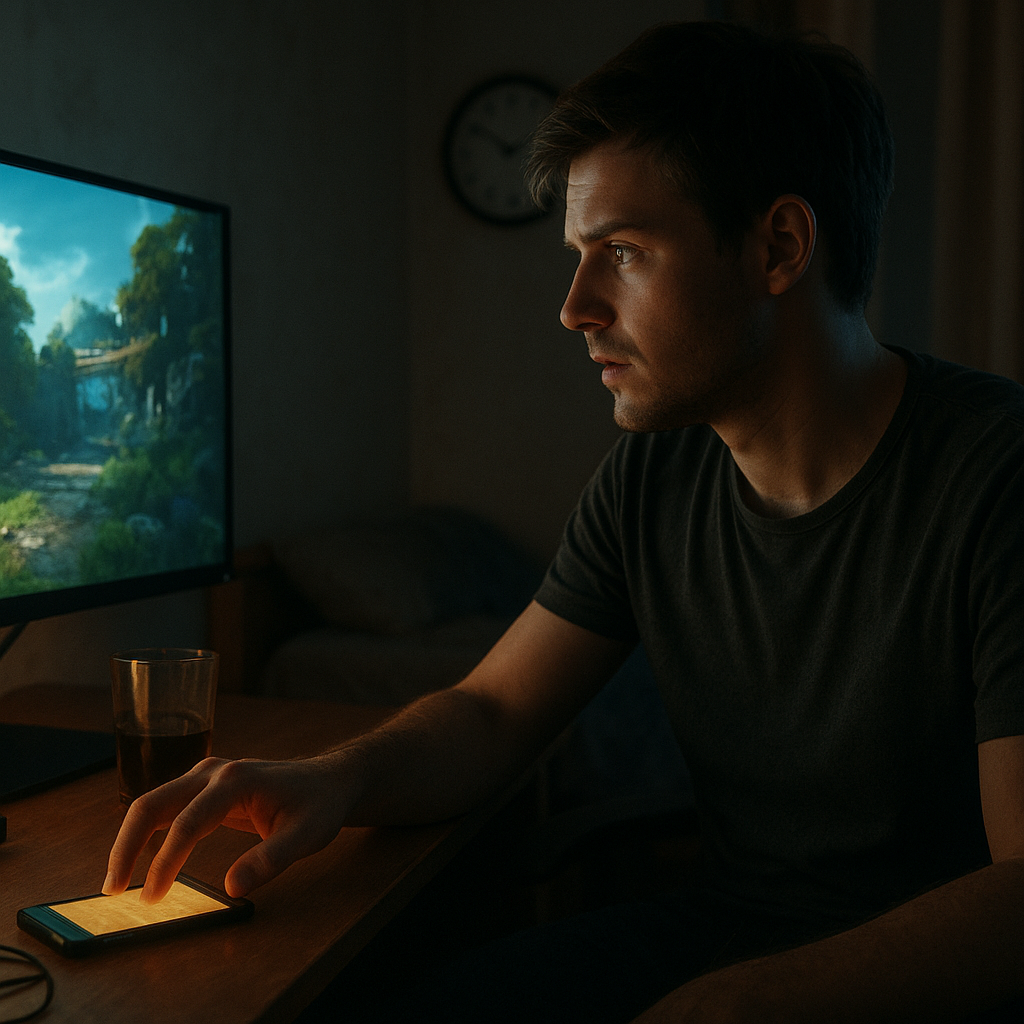
Every session has its own rhythm. Break it often enough, and a player may still be sitting at the game without feeling fully engaged.